- 3D Printing Services

- CNC Machining Services

- Vacuum Casting Services

- Surface Finishing Services


 English
 Español

China SLA, DLP, SLS and SLM 3D Printing and Vacuum Casting Factory
Content
- 1 The Direct Answer: Matching Print Technology to Part Requirement
- 2 SLA Resin 3D Printing: The Standard for Smooth, Accurate Prototypes
- 3 DLP Resin 3D Printing: Speed and Repeatability for Prototype Runs
- 4 Comparing SLA and DLP on the Metrics That Matter
- 5 SLS Nylon 3D Printing: Functional Parts Without Support Structures
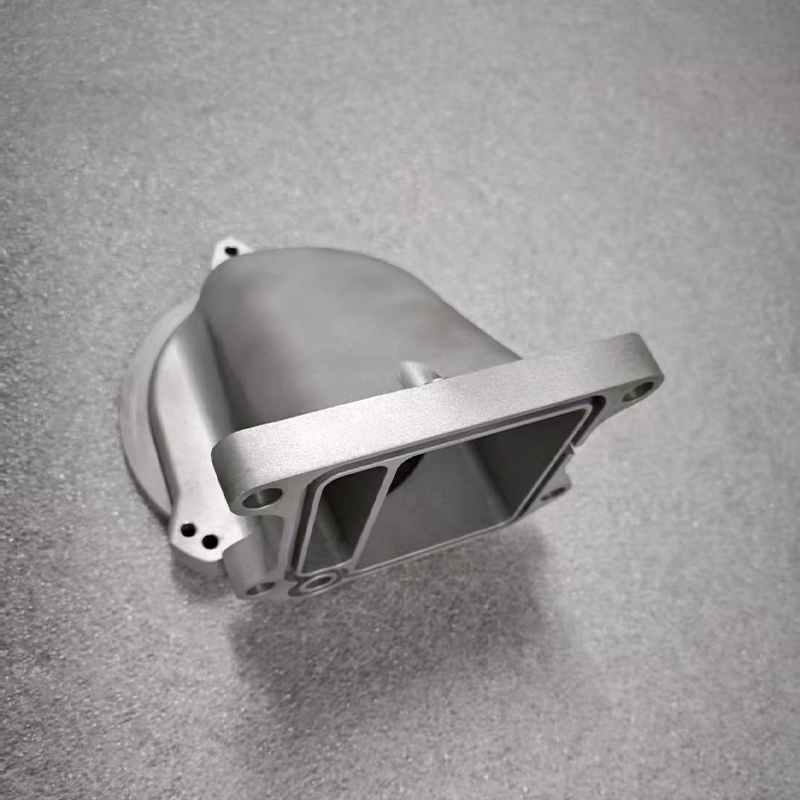
- 6 SLM Metal 3D Printing: Geometry That Machining Cannot Reach
- 7 Four Printing Technologies Side by Side
- 8 Vacuum Casting: Multiplying a Master Into a Production-Ready Batch
- 9 Surface Finishing Services: Turning a Raw Part Into a Finished Product
- 10 Choosing a Route by Batch Size: A Decision Framework
- 11 Full-Range Capability Comparison Across All Five Routes
- 12 About Zhejiang Jiaheng Intelligent Equipment Manufacturing Co., Ltd.
- 13 Specifying a Job So the Right Technology Gets Chosen
- 14 Frequently Asked Questions
The Direct Answer: Matching Print Technology to Part Requirement
If you are comparing SLA, DLP, SLS and SLM before placing an order with a China SLA Resin 3D Printing Service Factory or an SLS Nylon 3D Printing Factory in China, the decision reduces to three questions asked in this order: what surface finish does the part need to leave the machine with, what mechanical load will it actually carry, and how many pieces are required this month versus this year. SLA and DLP resin processes win on surface smoothness and dimensional fidelity, SLS nylon wins on functional durability without support structures, and SLM metal wins on parts that must survive real mechanical and thermal load. Vacuum casting sits alongside all three as the bridge to batches of twenty to two hundred pieces once a master pattern has been validated, and surface finishing is the step that turns any of these outputs into a part that looks and performs like a finished product.
A useful shortcut for a first-time specification: choose SLA or DLP when the part will be judged by eye or fitted with tight clearance, choose SLS nylon when the part will be handled, clamped or assembled repeatedly, choose SLM metal when the part sees heat, pressure or structural load that plastic cannot survive, and choose vacuum casting the moment a single validated master needs to become dozens of identical copies. A China Custom SLA Resin 3D Printing Manufacturer that also runs DLP, SLS, SLM, vacuum casting and surface finishing under one roof removes the need to juggle separate vendors for each stage of that decision.
The remainder of this article works through each technology in technical detail, compares them on the criteria that actually drive sourcing decisions, and explains how vacuum casting and surface finishing complete the path from a single printed prototype to a batch of production-grade parts.
SLA Resin 3D Printing: The Standard for Smooth, Accurate Prototypes
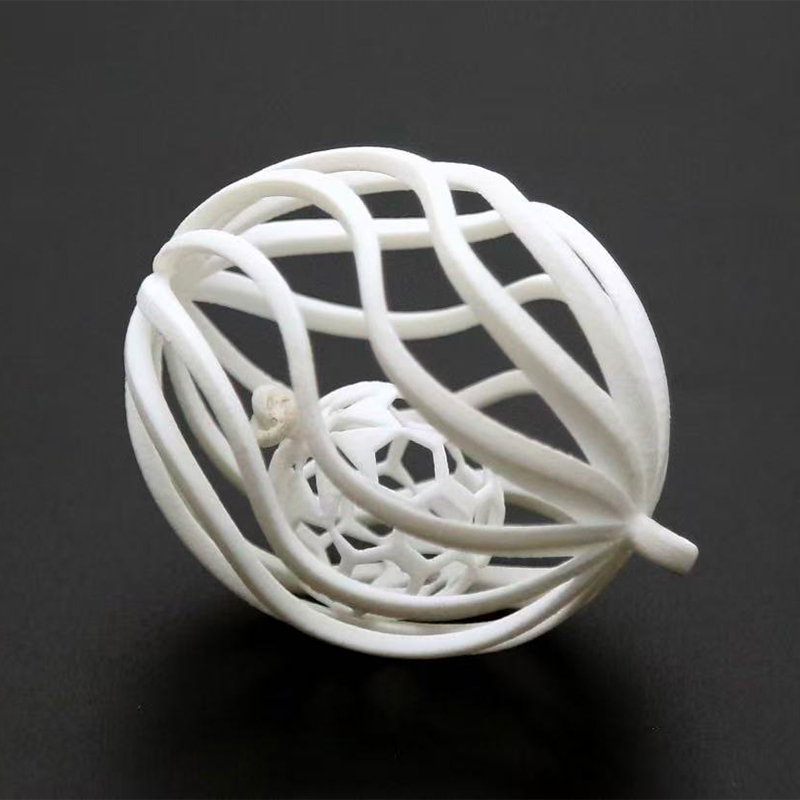
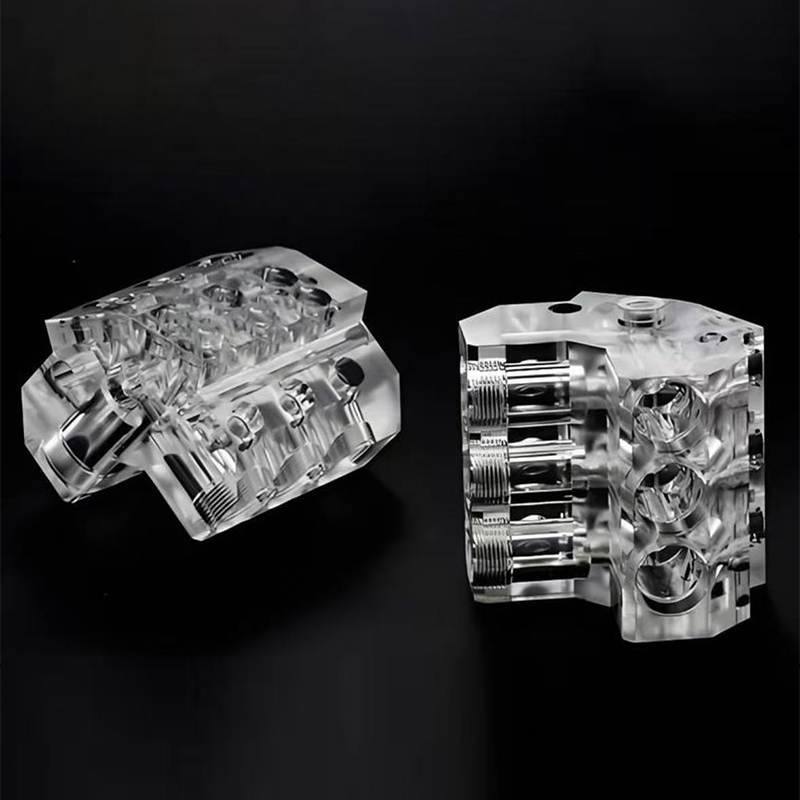
Stereolithography cures liquid resin layer by layer using a laser traced across the build area, which produces some of the smoothest as-built surfaces available in any 3D printing process. An sla 3d printing service is typically the first stop for appearance models, transparent housings, snap-fit enclosures and master patterns intended for vacuum casting, because the surface leaving the machine already approaches the finish that other processes only reach after secondary sanding.
Where SLA resin printing earns its place
A China SLA Resin 3D Printing Service Supplier commonly stocks standard, tough, transparent and heat-resistant resin families, each formulated for a different downstream purpose. Standard resins prioritise fine detail and are the default for design reviews. Tough and durable resins narrow the gap with engineering thermoplastics and suit snap fits and light functional testing. Transparent resins allow internal features to be inspected without sectioning the part, which is valuable for fluidic and lighting designs. Heat-resistant grades hold their shape under warm conditions and are the usual choice when a resin part must double as a short-run mold master, since the master needs to survive repeated silicone casting cycles without softening.
Layer heights between 0.025 mm and 0.1 mm are routine, and a well-finished SLA part can be sanded and primed to a surface indistinguishable from an injection-molded sample once it passes through surface finishing. This is precisely why sla resin printing is so often paired with vacuum casting: the printed part is not the end product, it is the master that defines every copy that follows.
DLP Resin 3D Printing: Speed and Repeatability for Prototype Runs
Digital Light Processing cures an entire cross-section of resin in a single flash of projected light rather than tracing it point by point, which gives a China DLP Resin 3D Printing Service Manufacturer a meaningful speed advantage on parts with a small footprint and significant height. Because each layer cures in one exposure regardless of how much detail it contains, DLP is particularly efficient for small, geometrically complex components produced in modest quantities, which is why it is closely associated with a 3d printing prototype service that needs to turn around design iterations quickly.
DLP shares SLA's resin chemistry and therefore much of its surface quality, but the two technologies are optimised for different build shapes: SLA scales more gracefully across a large flat build area, while DLP scales more efficiently in the vertical direction for smaller parts. A capable 3d prototyping services provider will assign a job to whichever of the two machines suits its geometry rather than defaulting to one technology for every request.
Typical DLP applications
- Small connector housings and clips requiring fine thread or snap-fit detail.
- Dental, hearing-aid and jewelry-adjacent components needing micron-level surface texture.
- Iterative design cycles where several revisions must be printed and compared within one working day.
- Master patterns for small cast components that will be replicated by vacuum casting in batches.
A China DLP Resin 3D Printing Prototype Supplier that also machines and finishes parts can carry a DLP master directly into vacuum casting without a handoff, which is where a 3d printer prototype service stops being a standalone step and becomes part of a continuous production path.
Comparing SLA and DLP on the Metrics That Matter
Buyers frequently ask whether SLA or DLP is the better choice without realising both belong to the same resin-curing family and differ mainly in how light is applied. The bar chart below scores both technologies across five practical criteria on a scale of one to ten, based on typical performance in a well-run production environment.
Five points stand out from this comparison. Large flat-area speed favours SLA because its laser can trace an entire wide platform in one pass without the resolution penalty DLP faces when its fixed projector must scale across a large field. Small-part vertical speed favours DLP for the opposite reason: a small footprint means every layer flashes almost instantly regardless of how tall the part grows. Fine surface detail is essentially tied, since both are limited by the same resin chemistry and comparable spot or pixel size at typical settings. Large build volume clearly favours SLA, whose laser-based approach scales to bigger platforms far more economically than a projector-based system. Batch repeatability slightly favours DLP because identical parts nested across a fixed projection field cure with less positional variation than a laser sweeping a wide area. Neither technology is categorically superior; the right choice depends entirely on part size and batch shape, which is why a serious 3d printing service prototyping shop keeps both machine types available rather than forcing every job through one platform.
SLS Nylon 3D Printing: Functional Parts Without Support Structures
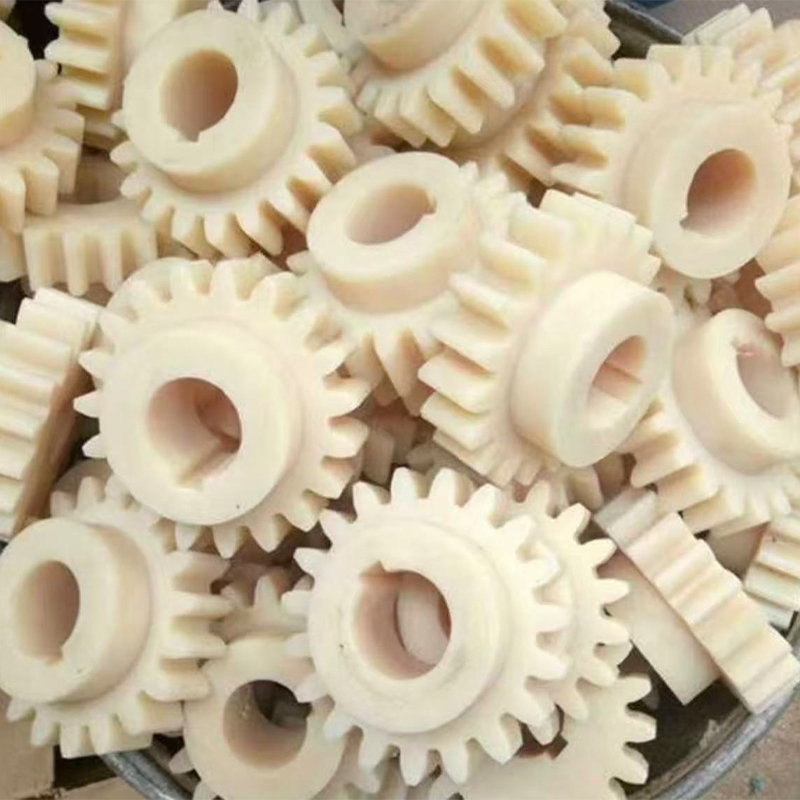
Selective Laser Sintering fuses powdered nylon with a laser inside a heated powder bed, and the unfused powder around each part acts as its own support during the build. That single fact changes everything about what nylon 3d printing service can produce: internal channels, interlocking assemblies, thin ribs and living hinges can be nested and printed together without a single support structure to remove afterward.
Material behaviour that matters for real parts
PA12 remains the workhorse grade for sls nylon printing, offering a good balance of stiffness, impact resistance and chemical resistance for general functional use. PA11 offers greater elongation before break, which suits snap-fit features and parts that flex repeatedly in service. Glass-filled and carbon-filled nylon grades raise stiffness and dimensional stability substantially, which matters for jigs, fixtures and brackets that must hold a precise datum under clamping force. Because 3d nylon parts come out of the machine with isotropic-enough mechanical properties in most planes, they can be treated as genuine functional prototypes rather than as display models, provided the part orientation during the build has been considered for the loads it will actually see.
The as-built surface has a characteristic slightly grainy matte texture from the surrounding powder. For parts headed toward a painted or cosmetic finish, this texture is removed during surface finishing through bead blasting, vapor smoothing or hand sanding before any coating is applied.
SLM Metal 3D Printing: Geometry That Machining Cannot Reach
Selective Laser Melting fully melts metal powder layer by layer to produce dense, functional metal parts directly from a digital file. An industrial metal 3d printing operation earns its keep on geometry that a cutting tool physically cannot reach: conformal cooling channels that follow the contour of a mold cavity, internal lattice structures that cut weight while retaining stiffness, and topology-optimised load paths that route material only where stress analysis says it belongs.
Materials and post-processing discipline
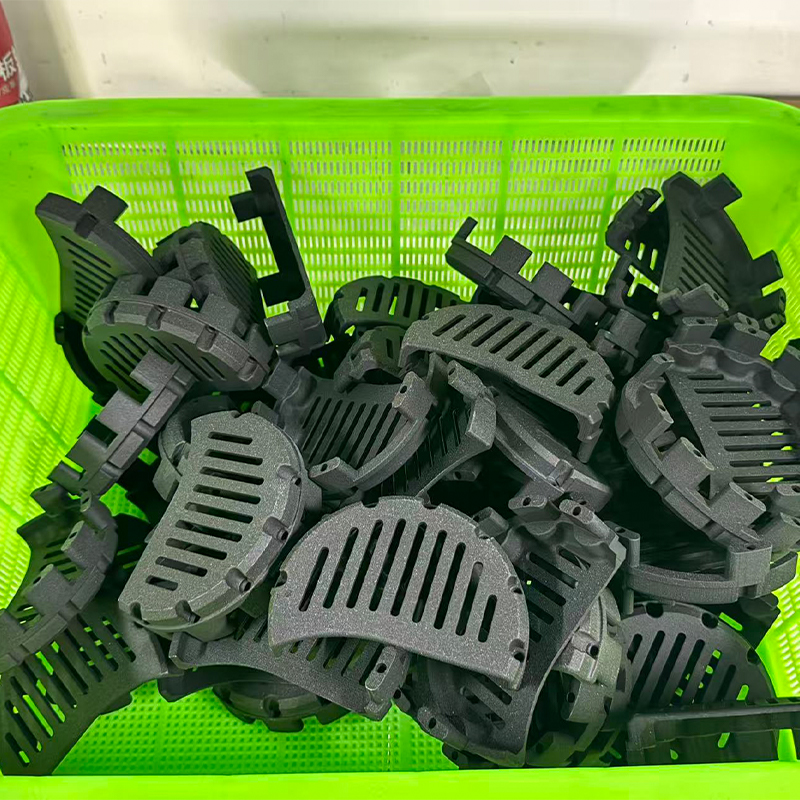
A China SLM Metal 3D Printing Service Factory typically processes aluminium alloys for lightweight structural parts, stainless steel grades for corrosion-resistant components, tool steels for mold inserts that need conformal cooling, and titanium for high-strength, low-weight applications. What separates custom metal 3d printing done properly from a merely decorative capability is the sequence that follows the build: stress relief while the part is still attached to the build plate, careful wire-EDM or bandsaw removal from the plate, support removal, and finish machining of every sealing face, bearing bore and threaded feature. An SLM part that has not been finish machined on its functional surfaces should never be installed as a precision component, regardless of how accurate the raw print appears.
For larger components, large metal 3d printing is generally approached through careful part orientation and, where necessary, segmentation and joining, since metal powder-bed build chambers are inherently smaller than polymer systems. Metal 3d printing companies that also operate CNC departments can finish-machine a segmented metal assembly to final tolerance in the same facility that printed it, avoiding a second freight leg for a partially finished, expensive metal part.
Four Printing Technologies Side by Side
The table below summarises the practical envelope of SLA, DLP, SLS and SLM as they are typically supplied, to support a first-pass technology selection before detailed process planning begins.
| Technology | Typical layer height | As-built surface | Material family | Best-fit use |
|---|---|---|---|---|
| SLA | 0.025–0.1 mm | Ra 3–6 µm | Standard, tough, transparent, heat-resistant resin | Appearance models, mold masters |
| DLP | 0.025–0.1 mm | Ra 3–6 µm | Standard and engineering resin | Small detailed parts, rapid iteration |
| SLS | 0.06–0.12 mm | Ra 10–15 µm | PA12, PA11, filled nylon | Functional parts, complex assemblies |
| SLM | 0.02–0.06 mm | Ra 8–20 µm | Aluminium, stainless, tool steel, titanium | Load-bearing and thermal-duty parts |
The pattern across the table is consistent: resolution and surface quality move in one direction as material moves from resin toward metal, while functional capability moves in the other. SLA and DLP sit at the fine end for finish but the soft end for mechanical duty, SLS sits in the middle with genuine functional durability, and SLM sits at the far end where a plastic process simply cannot follow. No single technology in this table outperforms the others on every column, which is exactly why a China Industrial 3D Printing Service Supplier that operates all four keeps every option open for a client whose part evolves from a design review model into a load-bearing production component.
Vacuum Casting: Multiplying a Master Into a Production-Ready Batch
Vacuum casting, also known as silicone mold replication, occupies the space between a single validated prototype and a full production tool. A China Vacuum Casting Services Factory takes a master pattern, most often produced by SLA or DLP printing or by precision machining, and encases it in liquid silicone that cures around every surface detail. The cured mold is cut along a planned parting line, and polyurethane resins engineered to simulate ABS, polypropylene, rubber or transparent acrylic are poured under vacuum into the resulting cavity, eliminating trapped air that would otherwise leave voids in the finished casting.
The line chart below tracks the average number of usable copies remaining as successive castings are pulled from a single mold, illustrating why molds are typically retired and replaced rather than pushed indefinitely.
This curve explains the standard planning rule used across the industry. Dimensional fidelity stays extremely close to the master for the first ten to fifteen castings, which is why early copies from a mold are indistinguishable from the master pattern itself. The decline accelerates noticeably after the fifteenth casting as the silicone begins to lose elasticity and sharp internal corners round slightly with each demolding cycle. By around casting twenty-five, fidelity has typically dropped enough that a quality-conscious operation retires the mold rather than risk out-of-tolerance parts reaching a client. This is why a hundred-piece order is planned around four to five parallel molds rather than one mold run to exhaustion, since running molds in parallel keeps every casting within the high-fidelity region of this curve. The practical takeaway for buyers is that vacuum casting batch quotes should specify how many molds will be used, not just the total piece count, because that detail determines the dimensional consistency of the batch as a whole.
Surface Finishing Services: Turning a Raw Part Into a Finished Product
Every process described above leaves a part with a characteristic raw texture, and none of them are typically shipped in that raw state to an end customer. A Surface Finishing Services Manufacturer in China converts a printed, cast or machined blank into a part that matches its intended appearance and functional surface requirements, and this stage should be specified with the same precision as any dimensional tolerance.
Finishing options available for printed, cast and machined parts
- Sanding and hand polishing to remove layer lines from SLA, DLP and SLS parts before coating.
- Bead and sand blasting for a uniform matte texture on nylon and metal parts.
- Vapor smoothing for nylon parts requiring a sealed, low-friction surface.
- Spray painting matched to a supplied colour reference in gloss, satin, matte or soft-touch systems.
- Anodising for aluminium SLM parts needing corrosion resistance and consistent colour.
- Electroplating and vacuum metallising for reflective decorative surfaces on plastic or metal substrates.
- Pad printing, silk screen printing and laser marking for logos, legends and traceability codes.
A China CNC Parts Surface Finishing Supplier that also operates the printing, casting and machining lines can carry a part through this stage without transferring it to an outside vendor, which matters most for cosmetic assemblies where colour and gloss must match across parts produced by different processes. Masking of threads, bearing bores and sealing faces before coating is the single most common quality issue in surface finishing, since a typical paint or plating film adds 30 to 60 microns of thickness that will close down a functional clearance if the feature is left unprotected.
Choosing a Route by Batch Size: A Decision Framework
Volume is often the single most decisive factor in choosing between direct printing and vacuum casting, more so than material or geometry alone. The chart below plots average cost-equivalent effort per part, expressed as a relative index rather than a currency figure, against batch size for the four printing technologies and vacuum casting.
The crossover pattern in this chart is the single most useful piece of information for a batch-size decision. At a batch of one, vacuum casting sits at the top of the effort scale because the entire mold-making step is charged against a single piece, confirming it should never be chosen for a true one-off. By roughly ten pieces the vacuum casting curve has already fallen sharply and continues to decline faster than any printing technology as volume grows, crossing below SLA and DLP resin printing well before the fifty-piece mark. SLM metal sits consistently above the resin and nylon curves at every batch size shown, reflecting the additional post-processing every metal print requires regardless of quantity. SLS nylon remains the flattest and lowest curve across almost the entire range, which is its core commercial advantage: predictable per-part effort with no tooling investment required at any volume. The crossover point between direct printing and vacuum casting typically falls between fifteen and thirty pieces, which is the range where most buyers should actively compare both routes rather than defaulting to whichever one they used last time.
Full-Range Capability Comparison Across All Five Routes
The radar chart below scores SLA/DLP resin, SLS nylon, SLM metal, and vacuum casting across five criteria that consistently recur in sourcing conversations, on a scale of one to five, to support a single-glance comparison across every route covered in this article.
This overlay makes the trade-offs across all five criteria visible at once. SLA and DLP form a shape stretched toward surface finish and single-piece speed, confirming their role as the fastest route to a presentable prototype but the weakest on mechanical duty. SLM metal pulls strongly toward mechanical duty and material range while pulling back on batch scalability and single-piece speed, reflecting the reality that every metal build carries substantial fixed post-processing regardless of how simple the part is. SLS nylon produces the most balanced, moderately sized polygon of the group, which is consistent with its role as the dependable middle ground for functional parts that need to be produced repeatedly without either resin's fragility or metal's overhead. Vacuum casting stretches distinctly toward batch scalability and surface finish while contracting on single-piece speed, exactly matching its identity as a multiplication process rather than a first-build process. No single shape covers the full chart, which is the clearest evidence that a genuinely useful supplier relationship depends on access to all four printing technologies plus casting and finishing, rather than expertise in only one.
About Zhejiang Jiaheng Intelligent Equipment Manufacturing Co., Ltd.
Zhejiang Jiaheng Intelligent Equipment Manufacturing Co., Ltd. is a pioneer in industrial innovation and manufacturing. Our expert design team turns client ideas into practical, aesthetic product designs. We offer 3D printing in resin, nylon, metal, and other materials, and have advanced machining. Silicone mold replication allows for low-cost, high-precision small-batch production. Surface treatments like painting enhance product appearance. With our one-stop service, clients can finish the design-to-product process on one platform, saving time and cost. We aim to be a reliable long-term partner for industrial development.
Within that structure, SLA and DLP resin printing serve the earliest design conversations, SLS nylon carries functional prototyping and low-volume end-use parts, SLM metal takes on geometry and load cases that no other process can reach, vacuum casting multiplies a validated master into a production-ready batch, and surface finishing delivers every part in the condition its end market expects. Every stage shares the same part file, the same quality record and the same engineering point of contact, which is the practical meaning of a one-stop platform rather than a marketing description of one.
Specifying a Job So the Right Technology Gets Chosen
A well-specified request removes most of the guesswork from technology selection, and the sequence below reflects the information an engineer actually needs before recommending SLA, DLP, SLS, SLM or vacuum casting.
- State the part's purpose plainly: visual review, fit check, functional test, or end-use component.
- Specify the quantity needed now and the quantity likely needed within the following six months.
- Identify any features that must be watertight, load-bearing, transparent or heat-exposed.
- Note whether the part must match an existing colour, texture or gloss standard.
- Flag any internal geometry, such as channels or lattices, that a cutting tool cannot access.
- Confirm the operating environment, including temperature range and exposure to chemicals or sunlight.
A China Custom DLP Resin 3D Printing Factory or an SLM metal supplier that receives this information up front can recommend a route with confidence rather than defaulting to whichever machine happens to be free. The technology decision should follow the part's requirements, not the other way around, and a supplier who asks these questions before quoting is demonstrating exactly that discipline.
Frequently Asked Questions
Q1: What is the main practical difference between SLA and DLP printing?
Both cure liquid resin and produce comparable surface quality, but they scale differently. SLA uses a laser that traces each layer point by point, which scales efficiently across large flat build platforms. DLP projects an entire layer at once, which is faster for small parts with significant height because build time depends on the number of layers rather than the amount of detail per layer. In practice, choose SLA for larger or wider parts and DLP for small, detailed components produced in modest batches.
Q2: Can SLS nylon parts be used as final production components, or are they only prototypes?
SLS nylon parts are routinely used as final production components, particularly in glass-filled or carbon-filled grades that add stiffness and dimensional stability. They serve well as brackets, housings, ducts, jigs and fixtures across many industries. The main considerations are surface texture, which can be refined through bead blasting or vapor smoothing, and long-term exposure to ultraviolet light or sustained elevated temperature, both of which should be checked against the specific material datasheet before final specification.
Q3: Why does an SLM metal part need machining after it comes out of the printer?
As-built metal printing achieves good but not machining-grade tolerance on functional features, and its surface finish, while acceptable for many geometries, is generally too rough for sealing faces, bearing bores or precision threads. Finish machining after stress relief and support removal brings these specific features to the tolerance and surface finish the application actually requires, while leaving the complex internal geometry exactly as printed. This combination is why serious metal printing suppliers operate machining departments rather than shipping parts straight from the build plate.
Q4: At what batch size does vacuum casting become more efficient than direct printing?
The crossover typically falls between fifteen and thirty pieces, depending on part size and geometric complexity. Below that range, the fixed effort of building a mold outweighs its benefit. Above it, the mold's cost is spread across enough parts that vacuum casting becomes the more efficient route, and its advantage continues to grow as batch size increases toward the point where a production tool would eventually be justified.
Q5: How many parts can be produced from a single vacuum casting mold before quality drops?
Dimensional fidelity stays close to the original master for roughly the first fifteen castings and then declines as the silicone gradually loses elasticity and sharp internal corners soften. Most quality-conscious operations retire a mold around the twenty to twenty-five casting mark rather than risk parts falling outside tolerance. For larger orders, several molds are produced from the same master and run in parallel, keeping every casting within the high-fidelity portion of that curve.
Q6: Does surface finishing change the dimensions of a printed or cast part?
Yes, and this is one of the most commonly overlooked details in a specification. Sanding removes a small, generally controllable amount of material, while spray painting and plating add material thickness, typically in the range of 30 to 60 microns per surface depending on the coating system. Any feature with a tight functional clearance, such as a bearing bore, a threaded hole or a sealing face, should be masked before coating or machined after finishing, rather than left to absorb whatever film thickness the process happens to apply.
-
 Standard FDM Materials 3D Printing Service (PLA, PETG, ABS)
-
 Aluminum Alloy AlSi10Mg 3D Printing Service
-
 Decal & Silk Screen Printing
-
 PAHT+CF High-Temp Nylon Carbon Fiber Reinforced Material 3D Printing Service
-
 PPS+CF Carbon Fiber Reinforced Material 3D Printing Service
-
 HT-PLA High-Temperature PLA Material 3D Printing Service
Contact Information
-

zjjh@jiahzn.cn
-

+86-18936159957
-
+86-18966326325
ADD
-

Building 7, No. 188, Hongni Section of Zha Wang Road, Danghu Subdistrict, Pinghu City, Jiaxing City, Zhejiang Province, China
Copyright © 2026 by Zhejiang Jiaheng Intelligent Equipment Manufacturing Co., Ltd. OEM/ODM Integrated Smart Manufacturing Platform Manufacturers
