- 3D Printing Services

- CNC Machining Services

- Vacuum Casting Services

- Surface Finishing Services



 English
 Español

CNC Machining Services Guide: 3-Axis, 4-Axis, 5-Axis Compared
Content
- 1 What CNC Machining Services Deliver for Aluminum and Metal Parts
- 2 Common Types of CNC Machining Services and Their Characteristics
- 3 How CNC Machining Systems Work: Principles and Structure
- 4 Application Scenarios and Selection Criteria for Aluminum and Metal CNC Machining
- 5 Detailed Comparison: Aluminum CNC Machining Service Tolerance and Cycle Time
- 6 Industry Adoption of Multi-Axis and Aluminum CNC Machining
- 7 Surface Finish and Feed Rate Relationship in Metal CNC Machining
- 8 Machine Utilization: A Capacity Snapshot for CNC Machining Services
- 9 Maintenance Guidance for CNC Machining Equipment
- 10 Choosing a CNC Machining Services Partner
- 11 Frequently Asked Questions
- 11.1 When does a project need 5 axis cnc machining services instead of standard 3-axis milling?
- 11.2 What tolerances can an aluminium cnc service typically achieve?
- 11.3 Is CNC machining suitable for both prototypes and production runs?
- 11.4 What materials do metal cnc services typically support besides aluminum?
- 11.5 What should I look for in an aluminum machining service for a long-term partnership?
What CNC Machining Services Deliver for Aluminum and Metal Parts
A dependable CNC Machining Services partner should be able to take a part from drawing to finished component with tight, repeatable tolerances, consistent surface finish, and material properties that match the design intent. CNC Machining uses computer-controlled cutting tools to remove material from a solid block or bar stock in a precisely programmed sequence, which is why it remains the standard choice for parts that need dimensional accuracy that additive or casting processes cannot always guarantee on their own. Buyers searching for an aluminium cnc service or a broader metal cnc services provider are typically trying to solve one of three problems: they need a functional prototype machined to final tolerance, they need a repeatable production run of structural or mechanical components, or they need complex geometry that requires simultaneous multi-axis tool movement.
This last category is where the distinction between standard three-axis machining and 5 axis cnc machining services becomes important. A five-axis machine can approach a workpiece from nearly any angle in a single setup, which reduces repositioning error and opens up geometries, such as curved surfaces, undercuts, and angled features, that would otherwise require multiple fixtures or separate operations. An experienced aluminum machining service provider will typically evaluate part geometry, tolerance requirements, and material behavior before recommending whether three-axis, four-axis, or five-axis machining is the right fit for a given project.
The sections that follow cover the common CNC process types and their characteristics, how CNC systems are structured and how they cut material, where each configuration fits best, a detailed side-by-side comparison, practical maintenance guidance, and answers to the questions buyers most often ask before selecting a CNC Machining Services partner.
The right CNC machining approach depends on part geometry and tolerance requirements, not simply on how many axes a machine advertises.
Common Types of CNC Machining Services and Their Characteristics
Most providers of CNC Machining Services organize their capability around a small number of established configurations, each defined by how many axes the cutting tool or workpiece can move along simultaneously. This directly affects the complexity of geometry that can be produced, the number of setups a part needs, and the achievable tolerance.
| Configuration | Typical Materials | Best Suited For |
|---|---|---|
| 3-Axis Milling | Aluminum, mild steel, engineering plastics | Flat and stepped geometry, brackets, plates |
| CNC Turning | Aluminum bar stock, stainless steel, brass | Cylindrical parts, shafts, bushings, fittings |
| 4-Axis Machining | Aluminum alloys, alloy steel | Parts needing rotational features on multiple faces |
| 5 Axis CNC Machining | Aluminum, titanium, stainless steel | Complex contoured surfaces, aerospace-style geometry, single-setup precision parts |
Three-axis milling remains the workhorse configuration for a large share of everyday parts, since it handles flat faces, pockets, and stepped features efficiently and at lower per-part cost than more complex setups. CNC turning is the standard process whenever a part is fundamentally cylindrical, such as shafts, bushings, or threaded fittings, and an aluminium cnc service focused on round parts will typically pair turning centers with live tooling to add secondary milling operations without a separate setup. Four-axis machining adds a rotational axis that lets the workpiece present multiple faces to the cutting tool without manual repositioning, which improves both accuracy and cycle time for parts with features on more than one side.
At the upper end of complexity, 5 axis cnc machining services allow the cutting tool to approach a workpiece from virtually any angle in one continuous setup. This is particularly valuable for aluminum machining projects involving contoured surfaces, angled mounting features, or thin-walled structural parts where repeated repositioning would introduce cumulative tolerance stack-up. Buyers evaluating an aluminum machining service for a new part should treat this table as a starting filter, since wall thickness, required tolerance, and surface finish specifications ultimately determine which configuration is appropriate.
Matching part geometry to the right axis configuration reduces setups, improves tolerance control, and shortens overall lead time.
How CNC Machining Systems Work: Principles and Structure
Every CNC Machining Services operation follows the same underlying logic: a CAD model is converted into CAM toolpaths, those toolpaths are translated into machine-readable G-code, and the machine's controller executes that code to move a rotating cutting tool relative to a fixed or rotating workpiece. What changes between machine types is how many directions that relative motion can occur in, and how rigidly the machine structure holds tolerance while cutting.
Core Structural Components
- A rigid machine bed and column that resist deflection under cutting forces, which directly affects achievable tolerance and surface finish
- A spindle assembly that rotates the cutting tool at speeds appropriate to the material, with higher spindle speeds generally required for aluminum than for harder alloys
- Linear and rotary axes, driven by ball screws or linear motors, that position the tool or workpiece with repeatable accuracy
- A tool changer that automatically swaps cutting tools between operations, reducing manual intervention during longer production runs
- Coolant and chip evacuation systems that manage heat and clear material away from the cutting zone, particularly important for aluminum, which generates long, stringy chips at high feed rates
For a machine offering 5 axis cnc machining services, the additional rotary axes typically take the form of a trunnion table or a rotating spindle head, either of which allows the tool to tilt relative to the workpiece rather than requiring the workpiece to be manually reoriented. This capability matters most on parts with compound curves or features that are not aligned to a simple X-Y-Z grid, since it allows the tool to stay perpendicular to the cutting surface throughout the operation, improving surface finish and reducing tool wear compared with approaching an angled surface off-axis.
Material behavior also shapes machine setup. Aluminum machining generally runs at higher spindle speeds and feed rates than steel or titanium because the material is softer and more thermally conductive, but it also requires careful chip management and appropriate tool coatings to avoid built-up edge on the cutting tool. A capable metal cnc services provider adjusts spindle speed, feed rate, and coolant strategy based on the specific alloy being cut rather than applying a single generic program across all materials.
Machine rigidity, axis configuration, and material-specific cutting parameters together determine the tolerance and finish a CNC provider can consistently deliver.
Application Scenarios and Selection Criteria for Aluminum and Metal CNC Machining
Selecting the right CNC Machining approach starts with matching part function and geometry to a process capable of meeting tolerance and volume requirements economically. The table below lays out common application scenarios alongside the selection factors that matter most.
Common Application Scenarios
|
Key Selection Criteria
|
A part with features on only one or two faces is often handled efficiently with three-axis milling or turning, keeping cycle times and cost predictable. A part with compound curves, undercuts, or angled bosses on multiple faces is a stronger candidate for 5 axis cnc machining services, since consolidating operations into a single setup reduces the tolerance stack-up that comes from repositioning a part between multiple fixtures. Material choice also drives process decisions: aluminum is generally favored for lightweight structural parts and heat-dissipating components, while stainless steel or alloy steel is selected when higher strength, wear resistance, or corrosion resistance is required, even though these materials typically machine more slowly than aluminum.
Order volume shapes the economics of CNC work as well. A single prototype or a handful of units rarely justifies extensive fixture design, while a production run of several hundred identical parts benefits from investment in dedicated fixturing and optimized toolpaths that reduce per-part cycle time. Companies sourcing from a CNC Machining Services provider for the first time often underestimate how much fixture design and programming time contributes to total lead time on complex parts, particularly for five-axis work where toolpath simulation is essential to avoid tool collisions.
Geometric complexity and required tolerance, not part size alone, determine whether a project needs three-axis, four-axis, or five-axis machining.
Detailed Comparison: Aluminum CNC Machining Service Tolerance and Cycle Time
The line chart below compares approximate achievable tolerance ranges across common CNC configurations, from standard three-axis milling through five-axis machining, as part complexity increases. These values represent general industry ranges rather than any single machine's guaranteed specification, and actual results depend on machine condition, tooling, and material.
The chart illustrates a consistent pattern across CNC configurations: as the number of controllable axes increases, achievable tolerance generally tightens because fewer manual repositioning steps are needed during the build. Five-axis machining tends to hold the tightest tolerances shown here because the part stays fixtured in a single setup throughout the entire operation, eliminating the small alignment errors that accumulate when a part is unclamped and re-fixtured between operations on lower-axis machines. Standard three-axis milling remains highly capable for simpler geometry but typically requires additional setups for features on multiple faces, which introduces more opportunity for cumulative error. General turning operations, while excellent for cylindrical accuracy, show a wider range here because it reflects a broad mix of part complexity rather than a single feature type. For buyers weighing an aluminium cnc service against a 5 axis cnc machining services provider, this trend explains why tighter-tolerance, multi-face parts are often routed to five-axis equipment even though the per-hour rate for that equipment is typically higher than for simpler three-axis work.
Tolerance generally tightens as axis count increases, mainly because fewer setups mean less cumulative alignment error.
Industry Adoption of Multi-Axis and Aluminum CNC Machining
Adoption of more advanced CNC configurations has grown steadily as machine costs have moderated and CAM software has become more capable of generating collision-free multi-axis toolpaths. According to general industry manufacturing reports, aluminum has remained one of the most widely machined metals across multiple sectors because of its favorable strength-to-weight ratio and machinability. The stacked bar chart below illustrates an approximate breakdown of machine configuration usage across three broad demand segments, expressed as relative shares rather than absolute production volumes.
The pattern across segments shows that three-axis machining still carries a meaningful share of prototyping work, largely because many early-stage parts have relatively simple geometry that does not require multi-axis capability. As applications move toward low-volume production and especially structural or aerospace-style components, the share attributed to five-axis machining increases noticeably, reflecting the growing prevalence of contoured, multi-face geometry in these categories. This trend aligns with broader industry commentary suggesting that demand for 5 axis cnc machining services has expanded as more industries adopt lightweight, complex-geometry aluminum components in place of heavier or more assembly-intensive designs. For a metal cnc services provider, this points toward the value of maintaining a mixed fleet of three-axis, four-axis, and five-axis equipment rather than specializing narrowly, since project mix can shift significantly depending on which application segment a client operates in. Buyers evaluating suppliers should ask directly what proportion of a shop's capacity is five-axis capable if their project pipeline includes complex geometry.
Five-axis capacity share rises with geometric complexity, making a mixed-configuration shop more adaptable across prototyping, low-volume, and structural projects.
Surface Finish and Feed Rate Relationship in Metal CNC Machining
Surface finish quality and machining feed rate are closely linked variables that every metal cnc services provider must balance against project deadlines. Faster feed rates generally reduce cycle time and cost but can leave more pronounced tool marks unless paired with finishing passes. The scatter plot below illustrates a general, illustrative relationship between feed rate and resulting surface roughness across a sample of common aluminum machining operations.
The scattered points trend upward from lower-left to upper-right, indicating that as feed rate increases, surface roughness also tends to increase within this illustrative sample. This general relationship is well documented in machining practice: higher feed rates remove material faster but leave wider, more visible cusp marks between tool passes unless a finishing pass at reduced feed rate is added afterward. The spread of points at each feed rate level also reflects that tool condition, material hardness, and coolant application introduce variability even at a fixed feed setting, which is why experienced machinists rarely rely on feed rate alone to predict finish quality. For projects with strict cosmetic or sealing-surface requirements, an aluminum machining service will typically program a roughing pass at higher feed rates followed by a slower finishing pass to achieve the required surface roughness without extending overall cycle time more than necessary. Buyers specifying tight surface finish requirements should communicate this early, since it affects both programming strategy and quoted lead time.
Surface finish and feed rate trade off against each other, so tight cosmetic or sealing surfaces typically require a dedicated slower finishing pass.
Machine Utilization: A Capacity Snapshot for CNC Machining Services
Machine utilization is a practical indicator of how efficiently a CNC Machining Services shop manages its equipment across prototyping and production work. A shop running equipment at very low utilization may indicate underused capacity or scheduling inefficiency, while a shop running close to full utilization on complex five-axis equipment may face longer lead times for new orders. The gauge below shows an illustrative utilization snapshot for a five-axis machining cell over a typical production period.
A utilization figure in this general range suggests a shop is running its higher-value five-axis equipment on a substantial portion of available shift hours while still retaining some scheduling flexibility to accommodate new or urgent orders. Utilization below this range often points to underinvestment in sales pipeline or excess capacity relative to demand, while sustained utilization above roughly ninety percent frequently signals that a shop is close to capacity-constrained, which can translate into longer quoted lead times for new five-axis work. This metric is one reason buyers evaluating 5 axis cnc machining services providers should ask directly about current lead times rather than relying on marketed capability alone, since a technically capable machine that is fully booked does not help a project with a near-term deadline. Shops that maintain a mix of three-axis, four-axis, and five-axis equipment generally have more flexibility to shift lower-complexity work away from constrained five-axis cells, helping keep overall throughput more predictable for clients.
Confirming current machine utilization and lead time is as important as confirming technical capability when selecting a CNC partner.
Maintenance Guidance for CNC Machining Equipment
Consistent part quality from a CNC Machining Services provider depends heavily on disciplined equipment maintenance. Multi-axis machines, in particular, accumulate wear across more moving joints and rotary components, which makes preventive care a bigger factor in long-term accuracy than it is on simpler equipment.
Routine Maintenance Checklist
- Inspect spindle bearings and monitor spindle runout regularly to catch early signs of wear before it affects surface finish
- Check ball screws, linear guides, and rotary axis components for backlash and re-lubricate on a set schedule
- Verify tool holder condition and tool changer calibration to avoid dimensional errors introduced by inconsistent tool seating
- Monitor coolant concentration and filtration, since degraded coolant accelerates tool wear and can affect aluminum surface quality
- Run periodic axis calibration checks, particularly on rotary axes used in 5 axis cnc machining services, to confirm positioning accuracy has not drifted
- Keep control software and post-processors updated to maintain compatibility with current CAM programming and avoid toolpath errors
Preventive maintenance intervals should scale with actual machine usage and the materials being cut rather than following a fixed generic calendar. A machine running near-continuous production shifts on harder alloys such as stainless steel will generally need more frequent tool and spindle inspection than one used primarily for lighter aluminum machining work. Rotary axes on five-axis machines deserve particular attention, since even small calibration drift in a trunnion table can translate into compounding positional error across a complex, multi-face toolpath. Shops offering reliable metal cnc services typically document these maintenance intervals internally and track spindle and axis performance data over time, allowing early detection of wear before it affects delivered parts.
Material handling practices also matter for consistent results. Aluminum stock should be stored in a way that avoids surface contamination and handling damage before machining, since surface imperfections can affect fixturing accuracy and final cosmetic finish. Maintaining clear records of material batch and heat treatment certificates, where applicable, supports traceability for parts used in structural or safety-relevant applications.
Rotary axis calibration and spindle condition monitoring deserve particular attention on multi-axis machines to prevent gradual accuracy drift.
Choosing a CNC Machining Services Partner
Selecting a CNC Machining Services partner for a specific project comes down to matching capability, communication, and downstream support to what the part actually requires. A provider that only machines parts without reviewing designs for manufacturability puts more risk on the buyer's side, particularly for complex geometry that may need slight design adjustments to avoid excessive tool access difficulty or thin, unsupported wall sections. Look for a partner who reviews drawings for machinability issues, such as deep pockets requiring long, less rigid tooling, before committing to a production run.
It is also worth evaluating whether a provider can support a project beyond the initial machining operation. Many parts require secondary finishing such as anodizing, bead blasting, or painting, and having a manufacturer or supplier who can coordinate these steps alongside machining reduces coordination effort compared with managing separate vendors at each stage. Providers who also offer 3D printing for early-stage prototyping and silicone mold replication for low-cost, high-precision small-batch production give clients a wider set of tools to validate a design before committing to full CNC production runs.
Zhejiang Jiaheng Intelligent Equipment Manufacturing Co., Ltd. operates in this space as an OEM commercial 3d printing service manufacturer and ODM large 3d printing services supplier, and its capability extends into advanced machining alongside 3D printing in resin, nylon, and metal. The company's design team works with clients to turn early concepts into practical, manufacturable product designs, which is particularly valuable when a part is being evaluated for CNC production and small adjustments to geometry could meaningfully reduce machining time. Its silicone mold replication process supports low-cost, high-precision small-batch production once a design is validated, and surface treatments such as painting are applied in-house to bring finished parts to a presentation-ready state. Because design support, CNC machining, 3D printing, and finishing sit on a single platform, clients working with this kind of one-stop CNC Machining Services partner can move from concept through prototype to production-ready aluminum or metal parts without managing multiple external vendors, which tends to reduce both coordination overhead and total project time. Whether a buyer is a design studio wholesaler sourcing a small batch of precision components or a manufacturer scaling into repeat production, this kind of integrated support generally proves more valuable over the life of a product than any single machine's specification sheet.
A provider that combines design feedback, CNC machining, and finishing under one roof reduces coordination risk across the full product development cycle.
Frequently Asked Questions
When does a project need 5 axis cnc machining services instead of standard 3-axis milling?Five-axis machining is generally recommended when a part has features on multiple angled or curved faces that would otherwise require several separate setups on a three-axis machine. Consolidating these operations into one continuous setup reduces cumulative tolerance error and often improves overall cycle time despite the higher per-hour rate of five-axis equipment. |
What tolerances can an aluminium cnc service typically achieve?Achievable tolerance depends on machine configuration, part geometry, and setup strategy, but well-maintained CNC equipment can generally hold tolerances in the range of a few hundredths of a millimeter for aluminum parts, with tighter tolerances more consistently achievable on multi-axis equipment that requires fewer setups. |
Is CNC machining suitable for both prototypes and production runs?Yes, CNC machining is widely used for both purposes because the same process and, in many cases, the same programming can carry a part from initial prototype through to low or mid-volume production, which is valuable for validating fit and function before scaling further. |
What materials do metal cnc services typically support besides aluminum?Beyond aluminum, common materials include stainless steel, alloy steel, brass, and titanium, each selected based on strength, corrosion resistance, or weight requirements. Material choice affects spindle speed, feed rate, and tooling selection, so it should be confirmed early in the quoting process. |
What should I look for in an aluminum machining service for a long-term partnership?Look for a manufacturer or supplier offering a mixed fleet of three-axis, four-axis, and five-axis equipment, clear design-for-manufacturability feedback, in-house finishing capability, and transparent communication about current lead times and machine utilization to keep repeat orders predictable. |
related products
-
 Titanium Alloy Ti6Al4V 3D Printing Service
-
 Yellow ABS-Like Resin 3D Printing Service
-
 Stainless Steel 316L 3D Printing Service
-
 PPS+CF Carbon Fiber Reinforced Material 3D Printing Service
-
 HT-PLA High-Temperature PLA Material 3D Printing Service
-
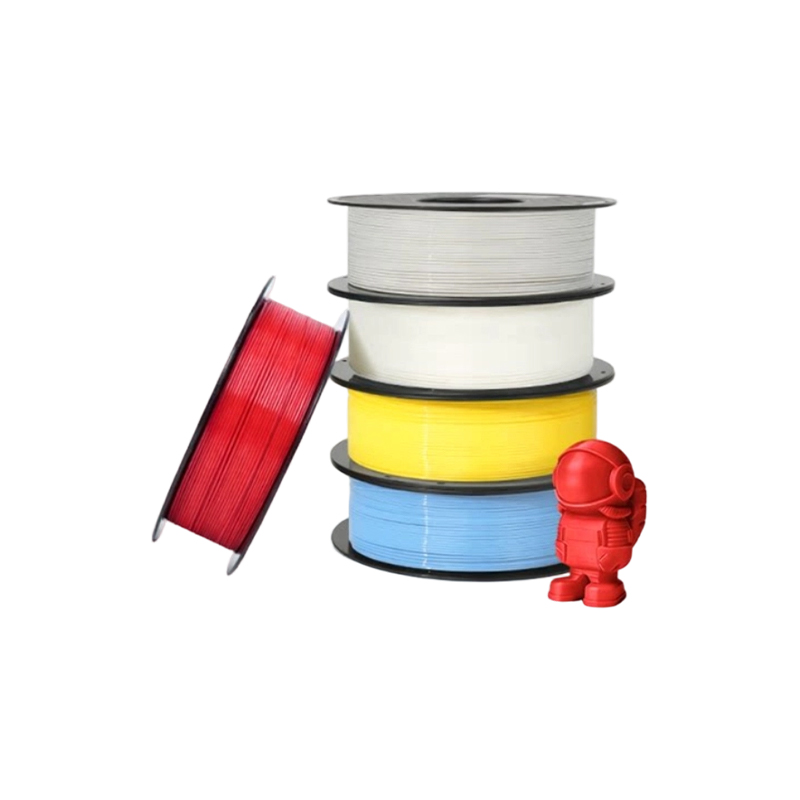 Standard FDM Materials 3D Printing Service (PLA, PETG, ABS)
Contact Information
-

zjjh@jiahzn.cn
-

+86-18936159957
-
+86-18966326325
ADD
-

Building 7, No. 188, Hongni Section of Zha Wang Road, Danghu Subdistrict, Pinghu City, Jiaxing City, Zhejiang Province, China
Copyright © 2026 by Zhejiang Jiaheng Intelligent Equipment Manufacturing Co., Ltd. OEM/ODM Integrated Smart Manufacturing Platform Manufacturers
